If you’ve ever walked into your living room to find your couch looking like it lost a fight with a tiny, furry tornado, you’re not alone.
Cat scratching furniture is one of the most frustrating behaviors pet parents face. Your beautiful sofa becomes a scratching post. Your curtains look like they’ve been through a shredder. And somehow, your cat seems genuinely proud of the destruction.
Here’s the thing though: your cat isn’t trying to ruin your stuff or drive you crazy. Scratching is a completely natural, necessary behavior for cats. It’s not a phase. It’s not something they’ll outgrow. It’s hardwired into who they are. So instead of fighting against their nature, let’s work with it.
I’m sure our long-term readers have seen just how roughed up our couches used to get back in Canada, especially from Kalista being a little scoundrel; however, what you may not know is that Aramis and Cleo are both scratching fiends themselves.
Though most of our furniture has been safe, there have been instances where one of our three cats becomes obsessed with the material of a chair, blanket or carpet and begins the early demise of a newly purchased item.
Kalista loves tight fabrics on couches, while Cleo loves loose materials such as blankets and curtains and Mish… well… Mish is shockingly an all around terror who will try to scratch everything possible.
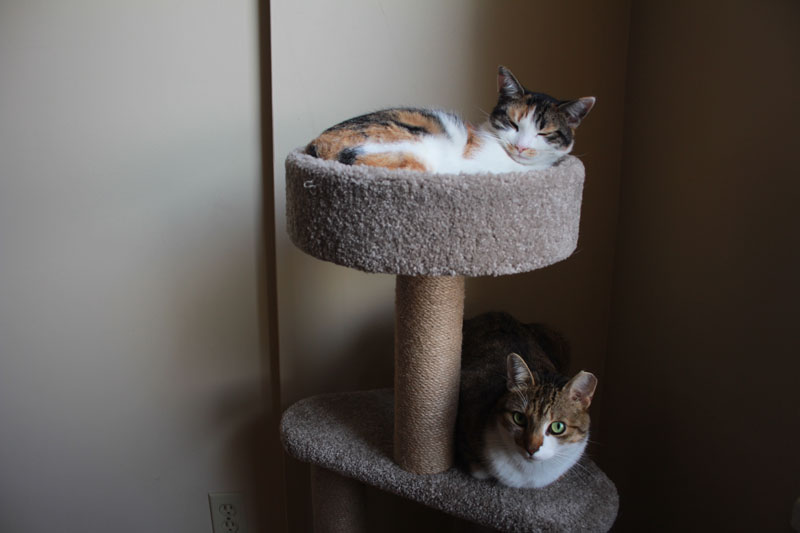
Why Cats Scratch Furniture (And It’s Not to Annoy You)
Before we talk about solutions, let’s understand why cats scratch in the first place. When you know what’s driving the behavior, you can actually address it instead of just treating the symptom.
Claw Maintenance
Cats scratch to remove the outer sheath of their claws. Think of it like how you might file your nails or peel off dead skin. It’s maintenance.
Their claws need this. When cats scratch, they’re keeping their claws sharp, healthy, and ready for whatever they need to do (climb, hunt, defend themselves). Without scratching, their claws would become dull, overgrown, and uncomfortable.
If you are the human in charge of cutting your cat’s nails you may have seen one of your cat’s nails flaking or chipped. Think of this as a “hang nail” as if a nail is left in this state for too long it may splinter and cause damage to your cat’s paw or nailbed. In extreme cases, a cat may end up losing their nail due to improper upkeep and while nails will often grow back, this is not a guarantee.
Marking Territory
Here’s something most people don’t realize: when your cat scratches your furniture, they’re not just scratching. They’re leaving scent markers.
Cats have scent glands in their paws, and scratching releases those scents onto surfaces. It’s how they communicate with other cats (and themselves) that this is their space. It’s territorial, and it’s calming for them.
Your couch smells like home because your cat has marked it as theirs.
You may notice your more dominant cat scratch objects more frequently than the others, or if two cats don’t get along (such as Kalista and Cleo), you may notice that one will begin to scratch furniture as soon as the other enters the room.
Dominance and territory marking are extremely important to take note of as if you identify that your cat is scratching due to either of these, you can make an effort to reduce the stress caused from the cats’ relationship; essentially catching multiple birds with a single stone.
Stretching and Exercise
Posture check!
Certainly you’ve had days if not weeks or months where your back is aching and you feel like you can’t move. While you may not realize it, your little ones can experience the same sensations.
Since cats sleep for hours a day they tend to get stiff and need a good stretch.
Scratching is a full-body stretch. It feels good. It works their muscles and is part of their exercise routine. When your cat scratches your furniture, they’re getting a workout and releasing tension at the same time.
Fun fact: many cats love when you stretch them out and lift their legs/scratch their armpits while they are sleeping on you. Of course this will not be true of all cats, but it’s more common than not.
Stress Relief
Cats also scratch when they’re anxious, stressed, or overstimulated. If your cat is scratching more than usual, it might be a sign that something in their environment has changed or that they’re feeling overwhelmed. Scratching is their way of self-soothing.
If you notice an increased behaviour of scratching, do your best to assess whether stress may be causing it. Ask yourself if anything has changed recently and potentially grab a product like Feliway which is a pheromone meant to reduce cat’s stress and anxiety.
When you’re out of the house think about playing some music that is focused on reducing cat stress and anxiety. Music was one of the ways that we helped reduce a lot of Beau’s stress and it lead me to research and compose a number of songs for him.
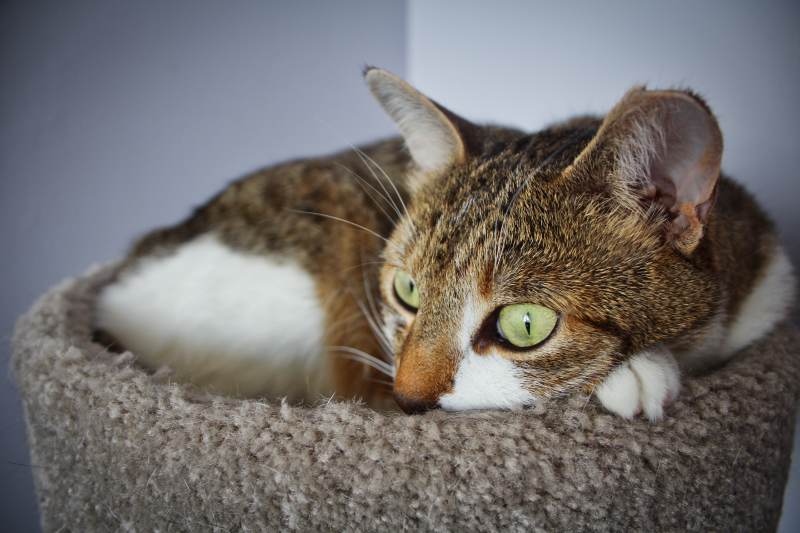
The Real Problem: Wrong Scratching Surfaces
Your cat isn’t scratching your furniture because they’re bad. They’re scratching your furniture because it’s the best option available to them. Your couch is the perfect height, the perfect texture, and it’s in the middle of where you all hang out. From your cat’s perspective, it’s ideal.
The solution isn’t to punish your cat or make them stop scratching. It’s to give them better options and make those options more appealing than your furniture.
How to Stop Cats From Scratching Furniture: Proven Solutions
Provide Multiple Scratching Posts and Pads
First things first: you need scratching posts. Not one. Multiple. Different cats have different preferences, and even the same cat might want variety.
Types of scratching surfaces to try:
- Vertical scratching posts: Tall posts that let cats stretch while they scratch. These are great for cats who like to scratch upward.
- Horizontal scratching pads: Low pads on the ground. Some cats prefer scratching at ground level, especially as they age.
- Angled scratching boards: These sit at an angle and appeal to cats who like a different scratching angle.
- Cardboard scratchers: Cheap, replaceable, and many cats love them. Plus, they’re easy on your budget.
- Sisal rope posts: The texture appeals to many cats, though some find sisal irritating over time.
- Carpet-covered posts: Some cats love these, though they can sometimes encourage carpet scratching elsewhere in your home.
The key is to experiment. Your cat will let you know what they prefer.
Size can also matter. While some cats won’t care at all, others may want very tall surfaces to scratch. For example, Cleo only uses scratching posts that are extremely tall so she can stand on her hind legs and stretch out nice and long. Kalista is fairly similar, though she tends to prefer carpets scratchers that she can splay across. Beau used to prefer to scrunch himself up on smaller cat trees and then splay on the floor.
I strongly recommend trying different types out and seeing which your cat(s) gravitate towards more often so you can buy more of that type.
Place Scratchers Strategically
Location matters. Put scratching posts near the furniture your cat is currently targeting.
If they love scratching your couch, put a scratching post right next to it. If they scratch by the window, put one there too. Make the better option convenient.
Also place scratchers in high-traffic areas where your cat spends time. Cats are more likely to use scratchers that are in the middle of their daily life, not hidden away in a corner.
If you’re someone who is home the majority of the day, put scratchers near you. Chances are your cat is going to hover around you, meaning that a scratcher beside your desk will more likely be used than one that is on the other side of the room.
Make Scratchers More Appealing Than Furniture
Once you’ve got the right scratchers in the right places, make them irresistible:
- Use catnip: Sprinkle catnip on scratchers to attract your cat. Refresh it every few days to keep it potent.
- Use silvervine or valerian: Some cats respond better to these alternatives than catnip. Try different options to see what your cat loves.
- Play near the scratchers: Use a toy to play with your cat right by the scratching post. Make it a fun, rewarding place to be.
- Reward your cat: When you catch your cat using the scratcher, praise them and give treats. Positive reinforcement works.
Make Furniture Less Appealing
While you’re making scratchers irresistible, make your furniture less tempting:
- Use furniture covers or throws: Cover the areas your cat loves to scratch. It changes the texture and makes it less satisfying.
- Double-sided tape: Cats hate the sticky feeling. Tape the edges of furniture or problem areas. Most cats will avoid it after a few encounters.
- Aluminum foil: Similar concept. Many cats dislike the texture and sound of foil.
- Citrus scents: Most cats hate citrus. Spray citrus-scented deterrent spray on furniture (test it first to make sure it doesn’t stain).
- Motion-activated deterrents: Some products spray air or make noise when your cat approaches. They can be effective, though some cats get used to them.
The goal here isn’t punishment. It’s making your furniture an unappealing choice compared to the scratchers you’ve provided.
Keep Your Cat’s Nails Trimmed
Regular nail trims reduce the urge to scratch. When nails are kept short and maintained, your cat doesn’t feel the need to scratch as intensely. Aim to trim your cat’s nails every 2-3 weeks.
If you’re nervous about doing it yourself, your vet or a groomer can help. Sometimes even pet stores will offer nail cutting services.
Consider Nail Caps
Nail caps are small plastic covers that go over your cat’s claws.
They’re considered humane, non-toxic, and they make scratching less damaging (though your cat can still scratch and maintain their claws). They last about 4-6 weeks and need to be replaced as your cat’s nails grow. Not all cats tolerate them, but many do.
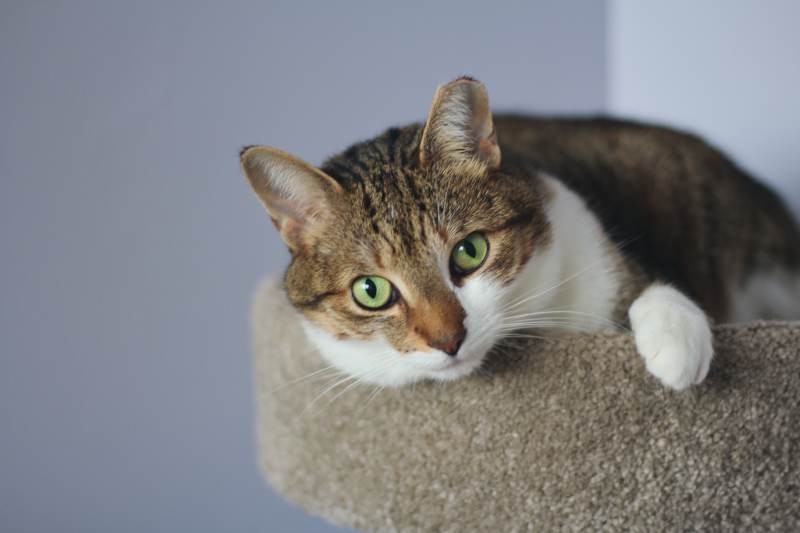
What NOT to Do
Before we wrap up, let’s talk about what doesn’t work and can actually make things worse:
- Don’t declaw your cat: Declawing is amputation. It’s painful, it can cause lifelong complications, and it’s considered inhumane by most veterinary organizations. There’s no good reason to do it. Period.
- Don’t punish your cat: Yelling, spraying with water, or physically punishing your cat doesn’t work and damages your relationship. Cats don’t understand punishment the way you think they do. They just learn to fear you or scratch when you’re not looking.
- Don’t ignore the behavior: The longer you let your cat scratch your furniture without providing alternatives, the more ingrained the habit becomes.
- Don’t give up too quickly: Changing behavior takes time. Give your solutions at least 2-4 weeks before deciding they’re not working.
Special Situations
Older Cats Scratching More
If your senior cat suddenly starts scratching more, it might be worth a vet visit. Increased scratching can sometimes indicate arthritis (they’re trying to stretch and relieve pain) or other health issues. Once you’ve ruled out medical problems, provide more horizontal scratchers that don’t require as much jumping or stretching.
Multiple Cats
With multiple cats, you need more scratchers. The general rule is one scratcher per cat, plus one extra. Place them in different areas so cats aren’t competing for the same spot. Some cats are territorial about scratchers, and having options reduces conflict.
Cats Who Only Want Your Furniture
Some cats are stubborn. They’ve decided your couch is the best scratching surface in the world, and they’re not interested in alternatives. For these cats, try moving a scratcher directly in front of the furniture they love. Make it impossible to ignore. You might also try different materials until you find one that clicks.
The Bottom Line
Your cat scratching your furniture isn’t a behavior problem. It’s a cat being a cat. The solution isn’t to stop them from scratching. It’s to redirect that natural behavior to appropriate surfaces and make those surfaces so appealing that your furniture becomes irrelevant.
It takes patience, the right tools, and a willingness to work with your cat’s nature instead of against it. But when you get it right, your furniture stays intact, your cat stays happy, and everyone wins. Your couch will thank you, and your cat will thank you too (even if they show it by scratching their new post instead of your face).

Great post and info! Even our Groucho who came to us declawed tried to scratch.
Thanks for all these tips so smart