Cats are hardy animals who spend most of their days sleeping and do the majority of their hunting at night. While it would be ideal for a cat to catch prey every day, it’s not always possible, leaving cats hungry for a night or two. But is that safe?
Being that most indoor cats have an endless supply of food at their paws, we’re not used to seeing our cats not eat for a night. It’s easy to spot when there’s a change in routine or habit and it can be alarming when one of your cats stops eating all of a sudden, especially if your cat stops eating for prolonged periods of time.
We had a great 3 years with our little ones until we ran into our first problem where Beau refused to eat all together. Prior to Beau not eating altogether, we had to deal with our younger cat being a picky eater, but that was nothing compared to seeing Beau, a cat who would literally eat through a bag of kibble, refuse to eat any food given to him.
Having a cat stop eating can be most alarming due to the fact that lethargy and a lack of appetite are symptoms of many longterm health conditions. Although a lack of appetite can also be momentary, it is best that you begin tracking other things that change in your cat’s behaviour.
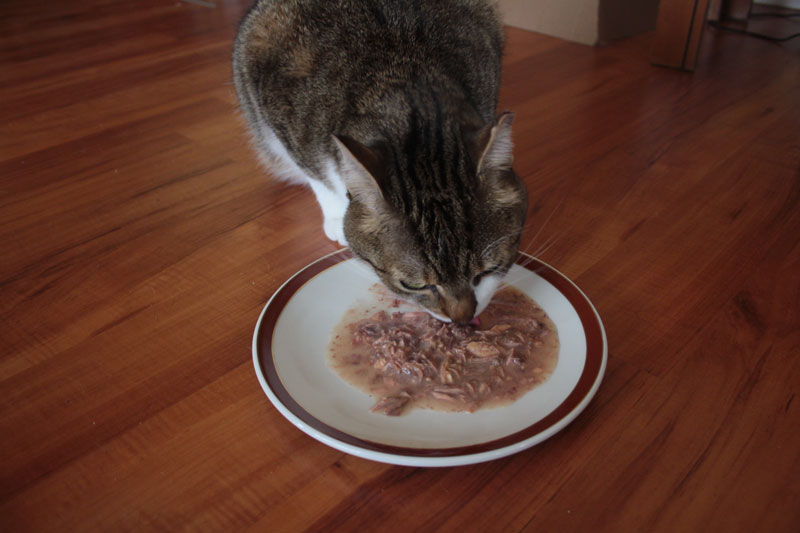
HOW LONG CAN CATS GO WITHOUT EATING?
Cats can go up to two weeks without eating, as long as they are still drinking water.
The main concern with cats not eating is that most cats aren’t huge drinkers. Since cats get the majority of their water from their food, both in the wild and indoors, your cat you may run into problems with dehydration before you run into problems with starvation.
Dehydration is very serious and may actually be fatal after two days with no water.
You can check if your cat is dehydrated by grabbing their nape. If their skin takes a long time to resettle they are dehydrated and you must take your cat to the vet immediately. Do not try to rehydrate your cat by yourself, as dehydration may not be the only problem afflicting your cat.
(LONG-TERM) MEDICAL REASONS YOUR CAT MAY NOT EAT
Many cats who refuse to eat are experiencing discomfort. Discomfort can be as small as a little bit of gas, but causes can range in severity and urgency.
Some of the most common severe medical reasons cats stop eating altogether include cancer, diabetes, dental disease, kidney disease, pancreatitis, ingestion of a foreign material, urinary tract infections/diseases (UTIs) and arthritis.
In many cases, the pain a cat feels will subside when the condition is dealt with, or the condition can be conditioned to help prevent long-term pain.
Another common cause for a cat refusing to eat is Hepatic Lipidosis, often referred to as fatty liver disease, which often goes undiagnosed as it is not usually the first ailment suspected for a cat not eating.
NON-MEDICAL REASONS A CAT MAY NOT EAT
Yes! Absolutely.
Some cats are really finicky. Sometimes cats get bored with the food they are being fed. Sometimes cats only like specific batches of food from a particular brand, or sometimes they lose interest with age… honestly, the list goes on and on!
It’s a good idea to have a few different foods on hand or speak to your vet about feeding your cat a rotational diet to ensure that they do not get bored of the food that they are eating. There are a lot of cases where cats can eat the same food for their whole lives, but some of us don’t get as lucky, especially when our cats become seniors.
Cats may also stop eating if there are changes in their routine or environment that bring on stress. Although stress can often be managed, it can be hard to pinpoint what the cause of that stress is.
Other non-medical issues can include hairballs and nasal congestion. I know nasal congestion is technically a medical condition, however, it is not usually long-term and can commonly be prevented.
HOW SOON SHOULD I TAKE MY CAT TO THE VET?
Well, as is with most things, if you are scared, take your cat to the vet immediately. I would strongly recommend taking your cat to the vet if you’ve noticed a few changes in your their. Take note of big changes in your cat’s behaviour such as whether or not your cat is using the litter box as often as they normally do. As mentioned, most cats will also become lethargic if they are feeling sick.
Cats usually stop eating when their illnesses have progressed immensely. Cats, like most animals, are very good at hiding ailments, and you want to make sure you catch it before it becomes even more severe.
If your cat hasn’t eaten anything at all for 2 days, I strongly suggest not waiting any longer before taking your cat to the vet. As mentioned, the scariest thing that cats can experience when not eating is dehydration.
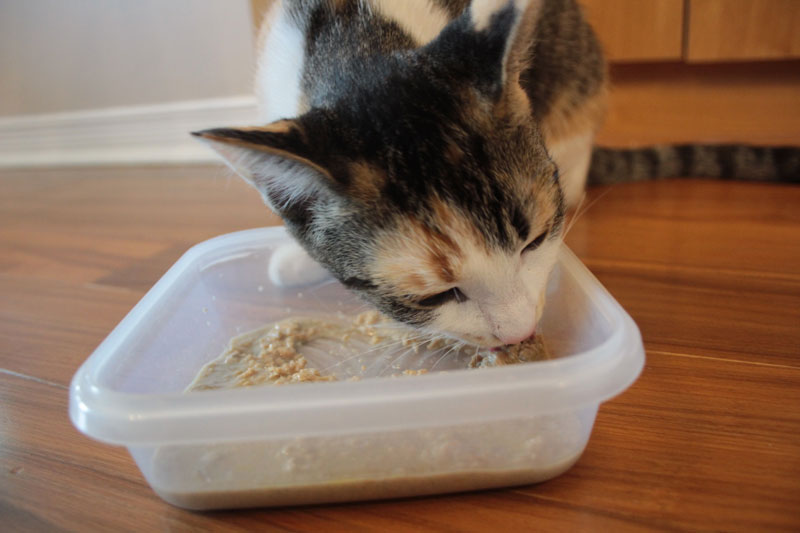
MY CAT STOPPED EATING AND IS LOSING WEIGHT, WHAT DO I DO?
Breathe in and take your cat to the vet immediately.
Unfortunately, extreme weight loss, especially from a cat that hasn’t eaten for over 24 hours, can be life-threatening. The risk is even higher if your cat is an overweight cat as extreme weight loss can lead to kidney failure.
If your cat has progressively been losing weight but is still eating a bit, I would still recommend speaking to a vet, but feed your cat food with higher fat. As is with all switches with diet, I would still recommend running it by your vet.
OTHER SYMPTOMS ASSOCIATED WITH A LOSS IN APPETITE
While poor appetite and weight loss can come with dehydration and lethargy there are some other visual cues that will let you know if your cat isn’t feeling well.
You will be able to tell something is wrong when you can feel your cat’s spine prominently. Your cat’s eyes may seem sunken and their eyes may start looking yellow. Cats will also become depressed and weak.
If your cat has any of these symptoms, immediately take them to the vet. Your vet will commonly recommend giving your cat some IV fluids.
WHICH IS MORE SERIOUS, NOT EATING OR NOT DRINKING?
Not drinking.
When a cat doesn’t eat, they lose a great number of nutrients and start to fatigue, but luckily, as soon as they eat next they should be back to their normal self.
This is not true of water though. If a cat is dehydrated, much like a human their internal organs will begin to fail.
This is true most of the liver and kidneys, but it does, in fact, affect other organs. The process goes as such: Stomach > Kidneys > Liver > Other Organs > Heart > Brain. Even if you get water into their system after the organs start shutting down, the damage may already be unrepairable.
IS THERE ANYTHING I CAN DO WHILE WAITING FOR THE VET?
Absolutely, but please don’t use these as ways to avoid the vet!
If your cat starts showing signs of dehydration grab a clean syringe and help them drink by gently opening their mouth and squirting the syringe in their mouth. The same can be done with wet food.
Again, a vet visit is the best answer, as they can hook your little buddy up to fluids, but if this is a dire case where the vet is closed or you’re on your way to the vet, that’s your best hope.
I wouldn’t do this regularly (ie. every day to get your cat in the habit of drinking) as it can be traumatic, but a number of vets do recommend doing it when your cat has frequent UTIs or is commonly dehydrated.
I must stress again, you hydrating your cat may not be enough to save them, make sure you take your cat to the vet if you suspect they are dehydrated.
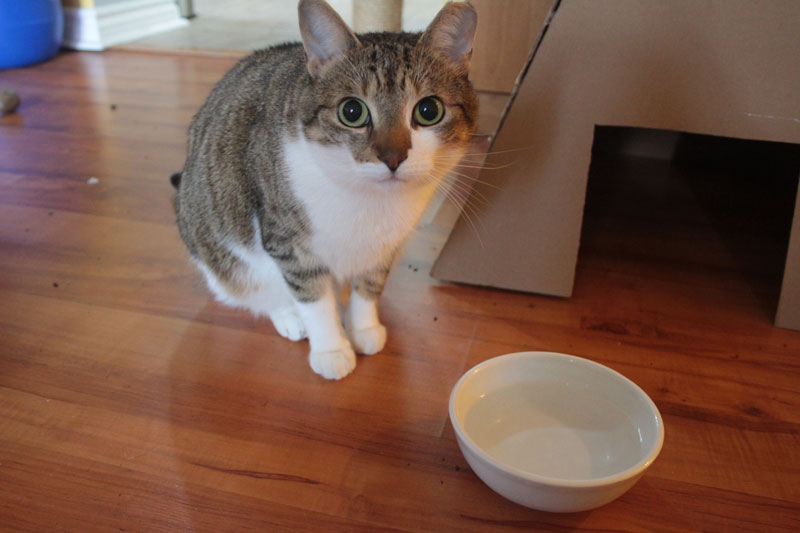
MY CAT HAS ALWAYS BEEN PICKY, ANY ADVICE FOR A PICKY CAT?
Well, it highly depends on why your cat isn’t eating. Some tips that have worked for us are:
1. Heat up your cat’s food
Your cat is more likely to eat food that smells more potent.
To make food more smelly you can either mix in warm water to your cat’s food (which will also keep your cat hydrated) or you can give your cat’s food a quick zap in the microwave (a maximum of 10-seconds).
2. Simply adding water and mixing the food
Cat’s can be picky about the consistency of their food and some cats actually prefer food that’s extremely wet and soft.
3. Put a couple of treats into your cat’s food
We’ve all seen those Temptations commercials so we all know how much cats love treats. Although I don’t usually recommend feeding your cat treats due to the high calories, they are a great way to entice them to eat.
We’ve had to do this a few times with our cat Beau. Once after his PU Surgery and the other time when he stopped eating altogether when we moved.
My favourite “healthy” treats include Greenies, Blue Buffalo, Caru and Bravo.
4. Rotating between different flavours or proteins
Cats get bored with foods just like we do. As much as I love sushi, I don’t think that I’d be able to eat it every day for the rest of my life. That being said, it’s best to rotate your cat through different flavours or even brands every so often.
Just because two products are labelled as “chicken” it doesn’t mean that they taste the same, so give it a go and see if your cat starts eating again! You might even notice your cat reaping added benefits as your cat explores new options.
5. Feed a rotation of wet & dry food
It’s good to give your cat options, especially if they are picky.
Both of our cats eat a mixture of wet and dry food, although each one has to eat them in a particular way. Both cats get fed 4 times a day. Kalista gets both wet and dry at all meals, while Beau only gets wet during 2 meals and dry during 2 meals.
Sometimes I recommend mixing some dry food into the wet food for cats who are extremely picky. I would be wary about doing this too frequently though as your cat may only want to eat their food mixed if it becomes habitual. That being said, play around with how and how much you feed them to see what works best.
6. Try finding food consistency that your cat likes
The awesome thing about cat foods, especially wet foods, is that they come in different consistencies like Stews, Patés, Broths, etc. That being said, your cat may be picky about the textures and consistencies their food has.
For example, Beau doesn’t like patés too much. He does love stew though, or when his food mixed with a good amount of water.
7. Try to find a differently shaped kibble
It sounds like such a dumb thing to think about, but cats can also be picky about the size and shape of their kibble.
Again, cat food is a pretty awesome thing because there are so many different types of kibble out there varying in all shapes and sizes.
8. Try a different type of diet
Before you change your cat’s diet to something you’ve never tried before, I recommend speaking to your vet, but there are some really great alternatives out there that aren’t just wet or dry food.
You may want to try Freeze Dried Raw Food or even Raw Food if it better suits your cat’s diet, but again, please consult your vet as many of the newer lines of food do not have years of success under their belt. What do I mean by that? Well, some are just too new on the market so we don’t know whether or not they are suitable for every animal, however, your vet will have a much better idea.
HEPATIC LIPIDOSIS: THE SILENT DANGER WHEN CATS STOP EATING
As mentioned earlier, one of the conditions that doesn’t get picked up immediately is Hepatic Lipidosis. Often this condition is only investigated if your cat exhibits a great variety of symptoms, though I want to provide you with as much information as possible about the condition since you are going to be the person who knows your cat best.
Please note, this section is not to alarm you or to give you a false fear that your cat has developed Hepatic Lipidosis; however, it should be used as a tool to investigate the “worst case scenario” and potentially assist in early diagnosis.
WHAT IS HEPATIC LIPIDOSIS?
Hepatic lipidosis, also called “fatty liver disease,” is one of the most serious conditions that can develop when cats stop eating.
Unlike dogs, cats have a unique metabolism that makes them especially vulnerable to this condition.
When a cat stops eating, their body breaks down fat stores for energy, but their liver can’t process the fat quickly enough. This causes fat to accumulate in liver cells, which damages the organ and prevents it from functioning properly.
The scary part? It can develop in as little as 48 to 72 hours of not eating. Your cat doesn’t need to be overweight or have an existing health condition for this to happen. Any cat can develop hepatic lipidosis if they stop eating for long enough.
WARNING SIGNS OF HEPATIC LIPIDOSIS
Watch for these specific symptoms that suggest your cat may be developing liver problems:
Jaundice (yellowing) – This is one of the most visible signs. Check your cat’s eyes, if they have a yellowish tint, this indicates bile buildup and liver dysfunction. This is a red flag that requires immediate vet attention no matter if your cat is eating or not.
Lethargy and weakness – Your cat will seem unusually tired, unresponsive, and may struggle to move around. They might not even lift their head when you call them.
Drooling – Excessive drooling or a wet chin can indicate nausea or mouth discomfort related to liver dysfunction.
Vomiting – Your cat may vomit frequently, especially if they do manage to eat something.
Bad breath – A foul or ammonia-like smell from their mouth can indicate liver problems.
Pale or white gums – Instead of the normal pink color, their gums may look pale or almost white.
If you notice any of these signs, don’t wait. Get your cat to the vet immediately.
WHO’S AT HIGHEST RISK?
While any cat can develop hepatic lipidosis, certain cats are more vulnerable:
Overweight or obese cats – These cats have larger fat stores that their liver must process if they stop eating. The more fat available to mobilize, the higher the risk of overwhelming the liver.
Senior cats (10+ years old) – Older cats often have slower metabolism and may have underlying liver or kidney issues that make them more susceptible.
Cats with pre-existing health conditions – Cats with diabetes, kidney disease, pancreatitis, or other chronic illnesses are at higher risk if they stop eating.
Cats under stress – Moving, changes in routine, or new pets can cause stress-related appetite loss, which can quickly lead to hepatic lipidosis.
Indoor cats – They’re less likely to find alternative food sources if they refuse to eat at home.
TREATMENT & RECOVERY RATES
The good news is that hepatic lipidosis is treatable, but it requires aggressive veterinary intervention. Your vet will likely recommend:
Hospitalization and IV fluids – Your cat will need fluids to prevent dehydration and support liver function.
Nutritional support – Many cats require a feeding tube (esophageal or gastric tube) to ensure they’re getting adequate nutrition while their liver recovers. This might sound scary, but it’s often the difference between life and death.
Medications – Your vet may prescribe medications to support liver function, manage nausea, or treat underlying conditions.
Blood work and monitoring – Regular blood tests track liver enzyme levels and overall progress.
Recovery timeline – With treatment, cats can recover in 2 to 3 weeks, though some take longer. The liver has remarkable regenerative ability if caught early enough.
Survival rates – When treated promptly, survival rates are around 80-90%. However, if hepatic lipidosis progresses without treatment, it becomes fatal. This is why early intervention is absolutely critical.
The longer your cat goes without eating, the more severe the hepatic lipidosis becomes and the harder it is to treat. This is why the “two-day rule” exists in veterinary medicine.
EMERGENCY TIMELINE: WHEN TO TAKE YOUR CAT TO THE VET
The following is a breakdown of timelines based on what is going on with your cat:
CAT HASN’T EATEN IN 2 DAYS
Action: Take your cat to the vet TODAY. Do not wait.
By day two, your cat is at serious risk for hepatic lipidosis. Even if they seem otherwise fine, their liver is already under stress. This is the critical window where early treatment makes the biggest difference. Don’t convince yourself they’ll start eating again on their own. They likely won’t, and the longer you wait, the worse it gets.
Bring a list of any symptoms you’ve noticed: lethargy, vomiting, changes in water intake, or anything unusual about their behavior.
CAT STOPPED EATING BUT IS STILL DRINKING WATER
Action: Contact your vet immediately. If it’s after hours, call an emergency vet.
The fact that your cat is drinking is good (dehydration is a major concern), but it doesn’t mean they’re safe. They still need to eat. Cats who drink but don’t eat are often experiencing pain, nausea, or stress. Your vet needs to figure out why.
Don’t assume this is just a picky eating phase. Sudden appetite loss in cats is almost always a sign of something wrong. Even if your cat has been a picky eater in the past, a complete refusal to eat is different and requires investigation.
WHEN TO TAKE CAT TO VET FOR NOT EATING (GENERAL GUIDELINES)
Less than 12 hours without eating:
- Monitor closely but not an emergency yet
- Make sure your cat has access to fresh water
- Watch for other symptoms (vomiting, lethargy, litter box changes)
- If your cat is a senior or overweight, lean toward calling the vet for advice
12 to 24 hours without eating:
- Call your vet and describe the situation
- They may want to see your cat or may ask you to monitor for another 12 hours
- If your cat is showing any other symptoms, don’t wait – go in
24 to 48 hours without eating:
- Schedule a vet appointment for that day if possible
- If your cat shows any warning signs (lethargy, vomiting, jaundice), go to an emergency vet immediately
- This is the critical window where hepatic lipidosis can start developing
More than 48 hours without eating:
- This is an emergency. Take your cat to the vet or emergency clinic immediately
- Don’t wait for a regular appointment
- Bring any information about when they last ate and what symptoms they’re showing
Special situations that require immediate vet care:
- Your cat is showing any signs of jaundice (white gums, yellow ears, or eyes)
- Your cat is vomiting or drooling excessively
- Your cat is extremely lethargic or unresponsive
- Your cat is showing signs of pain or distress
- Your cat is a senior, overweight, or has pre-existing health conditions
- Your cat hasn’t eaten AND hasn’t drunk water for more than a few hours
Remember: When in doubt, call your vet. They’d rather hear from you and reassure you that everything’s probably fine than have you wait too long and end up with a seriously ill cat. Trust your instincts. You know your cat better than anyone.
CONCLUSION
While cats are hardy and can last quite some time without food, it doesn’t mean you shouldn’t be concerned at all.
Not eating commonly leads cats to become dehydrated, especially if they are eating predominantly wet food.
Make sure to be checking in on your cat and making sure they are at least getting some water in their system to stay hydrated.
Have any other advice or experience? Let me know in the comments below. I would love to hear!

Hi! I have a question that I hope you are able to give me some advice on. My awesome kitty Wally is going through a tough time. It’s been almost two days now that he has been having trouble keeping food down. I took him to the vet yesterday and they were not able to help me without getting xerays. I didnt have the money to do the xerays and I feel just horrible. The first night I stayed up with him because he was gagging and gagging like he had a hairball that he couldn’t get to pass. He is shedding pretty badly right now and I have seen some pretty good sized hairballs that he has gotten up. He hates to be brushed so it’s hard to control. In the almost two days since he has been sick I dont think he has drank any water. Any food he tried to eat acts like its blocked because it comes right back out. The vet said he is breathing fine but I’m very concerned and dont know what else to do. He has been so good to me and I feel like I am failing him. It’s just not fair to him. If you have any suggestions I would be very appreciative. I just fed him some wet food with tuna oil on it hoping it would help him cough up what ever is stuck. He is so so hungry and ate the food but did not keep it down. I’m am just so sad that I have not been able to help him. Thank you.
Hey Jill, my sister’s cat has something similar. When this happens she usually keeps him hungry for about 4 hours (without trying to feed him so his body gets a break) then gives him very minimal food. If he is able to keep that food down, she gives him a tiny bit more at a time (with 4-hour intervals in between).
You can also try mixing a bit of water with the food to make sure that Wally stays hydrated, but just make sure you’re not overdoing it with the food since that will raise the chances of him vomiting.
After my feral cat got spay, she managed to escape and stock between floors in my home. Water and food doesnt look like been touched. Please, does anyone knows what to do ?Time running out.
Hello Lidiya, unfortunately, I have never been in this situation before, but I am contacting friends who work for a rescue to see if they have anything that may help you.
Have you tried contacting a local rescue? Folks who work for them tend to have really great nifty ideas on how to rescue cats who are in tight/scary situations. I’ll let you know if anything comes of me asking my friends 🙂
I have an senior cat, 18 yrs old. He is refusing to eat 90% of the time. I have a variety of foods that I offer him and can get him to consume about half of his daily recommended amount of food but it take feeding him multiple times throughout the day. He drinks plenty of water so he is good there. My finances are very tight right now & just spent over $500 on another cat that had injured a paw & it became infected. I am not sure if I am done dealing with that situation yet so to have another one begin a round of vet bills, I just can’t afford it.
Will he be ok since he is consuming some food & does drink an adequate amount of water? I tried a high calorie/vitamin supplement paste but he refused it & when I tried to force feed him with a syringe it went everywhere but into him.
Hey Linda, I’m sorry to hear that your cat isn’t eating very well. The fact that he’s refusing to eat can be a sign that something else is wrong with him, especially since he’s a senior, however, he can be sustained with water and a bit of food.
At the end of the day, it’s best to take him to the vet just to make sure he’s clear of any diseases or organ failure, but I also understand being under a financial constraint. Keep monitoring him for dehydration (pull on his neck and if his fur returns immediately he’s fine, however, if it slowly goes back to normal he’s dehydrated) and keep track of his energy levels, bathroom visits and any changes in temperament.
If he’s not taking to the syringe, try hand feeding him wet food and mixing it with some treats.
I hope that helps out.
Yup, Minko was a non eating kitty. Likely cause unknown, perhaps IBD or chronic pancreatitis.
For almost three years I handfed (forcefed) him…he would rarely take a bite of something. There was nothing wrong with his mouth, he was a chewer all that time, and he drank plenty of water on his own…But he lost a lot of weight, from about 9.5/10 pounds down to just over 6, I got him back up to almost 8 pounds…and he stabilized there.
Many years ago our family went on a long trip in winter time. We had three kitties, and Suki was very young. When we got back, Groucho was sitting in front of the closet…*she* had been stuck in there for over a week. Good thing it was cold outside…and she found warm scarves to ‘nest’ in…we rushed her to the vert…who declared her to be fine. Phew! And after that we always checked the kitty inventory before we locked up…I truly think she found a mouse or two…we live in an old rickety frame home, and rural.we see many mice in colder seasons…and the closet is on an outside wall, and just above the cellar…who knows…
I had to throw away a lot of ruined items…and air that closet out, MOL!
I’m so glad she was fine when you came back! That would have freaked me out so much!
Most of the time when my cats didn’t want to eat, it was not good. Lucy had cancer and Phoebe had kidney disease.
Oh no 🙁 That’s really terrible to hear and must have been very challenging for you. Giving you the biggest hugs.
Cats who don’t eat can go into liver failure comparatively rapidly – hepatic lipidosis – so DON’T wait very long to get your cat to the vet (or to eat), Years ago when I switched an older cat to a kidney formula which she hated and she was losing weight, the vet told me cats CAN starve themselves, so it is imperative not t o wait too long – two days, not two weeks !
Absolutely! I’m a huge advocate of going to the vet immediately. I’m also a very cautious pet parent.
Thanks for a great post. Our gang will only eat pate, and we have to rotate flavors. I can attest to survival without food for two weeks. One of our cats, who past many years ago, got trapped in a neighbors basement for two weeks with no food. She may have found some bugs or mice, but there was no evidence of that. Thankfully she made a full recovery.
Oh my gosh! I’m so glad she recovered very quickly! That’s so scary to hear!!
What a scary situation. My family and had this situation where she wouldn’t eat in my last cat Tigger. All she wanted to do is lay and sleep in her last days. We even tried treats. No luck. She died before we could get her checked. Best we could do is keep her comfortable. I wouldn’t wish this situation on anyone.
I’m so sorry to hear about this Crystal. And yes, sometimes we can’t do anything for our little ones. I know I’ve been in scary positions like that before, and wouldn’t ever wish it on anyone either.
Oy vey! A great but scary topic. I know that a feeding tube can be put in for cats who can tolerate the procedure. Oue Angel REFUSED to eat wet food when we decided that kibble was not good for her brother Chuck, and we were at a standoff for a few days until I relented. Once I discovered that sprinkled Parmesan cheese smelled like kibble, enough to get her to eat, we were officially canned food feeders from then on. Nowadays, I’d use nutritional yeast.
That’s so great to hear! And yes very scary topic, but it’s super important to talk about it 🙂